Interview | Giancarlo Bosio
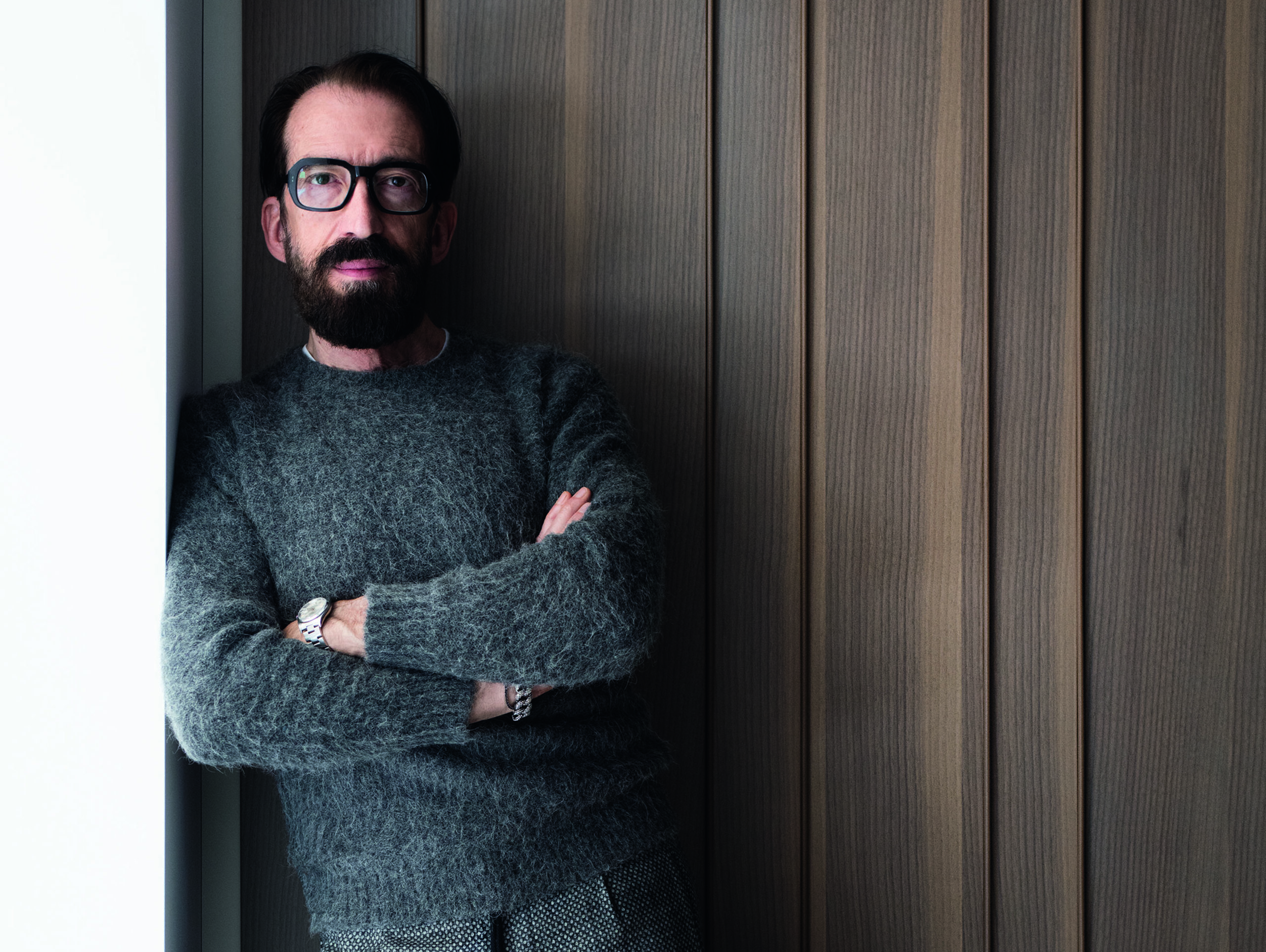
You have been the Creative Director of Giorgetti since 2013, during a period in which both the world of design and the brand itself have undergone profound changes. How has your role evolved over these years?
Twelve years within a company is significant. Like any brand, Giorgetti has experienced a constant and ongoing evolution in both style and attitude. It has greatly expanded from a product-sector perspective, broadening its range of offerings and opening not only to new markets but also to different product categories, reaching an even wider and more diverse clientele.
Over the past ten years, we have added systems such as wardrobes and kitchens, outdoor collections, and decoration, with particular attention to coverings and materials. We have moved from the product to the project, shaping a true Giorgetti lifestyle.
What future developments do you envision for Giorgetti? In which direction do you believe the brand’s aesthetic should evolve?
The Giorgetti brand has always stood somewhat outside the contemporary design style understood as the pursuit of pure lines and innovation. Instead, it has drawn upon tradition, embodying an approach to design that is current yet attentive to roots and canonical stylistic references.
As a company with 127 years of heritage, it draws strength from its past, using it as a tool to approach the projects of tomorrow. Giorgetti’s outlook is therefore to follow its own unique and personal path, one that expresses evolution without forgetting the intrinsic characteristics that have made the brand renowned worldwide.
Giorgetti has worked in recent years with some of the most important international designers. Could you tell us about a collaboration that has stayed with you and brought particular satisfaction?
I would mention the most recent one, which is still ongoing with great success: our partnership with Maserati, a historic Italian brand whose values are closely aligned with our own. Together with their Head of Design, Klaus Busse, we developed a creative dialogue that allowed us to rethink the very concept of “product”. Changing perspective is always an opportunity for improvement and reflection; this exchange added significant value both to the development of our interior collection and to their one-off Grecale project.
Another collaboration of great importance to me, both from an architectural and interior design standpoint, is the one with Richard Meier and Dante Benini for the design of our monobrand store in Dubai, set to open in the early months of 2026. In this case, we are talking about a new store concept, as it is a true self-standing building, constructed according to Meier’s architectural language in close collaboration with us.
The Giorgetti brand also has an important historical archive of products that remain both fascinating and very current. Which piece from Giorgetti’s historical collections is your favorite?
I could mention many! At this moment, one in particular comes to mind: the Spring armchair from 1992, designed by Massimo Scolari. The piece combines the idea of a more streamlined and essential design with the concept of high cabinetmaking, because within its elements you can find several design solutions typical of this kind of object: the solid wood craftsmanship, the integration of technological components within the structure that allow movement, and small inlay details on the back where ebony buttons are visible.
Taken as a whole, Spring is truly a small archetype of a project that is essential, yet remarkably rich.
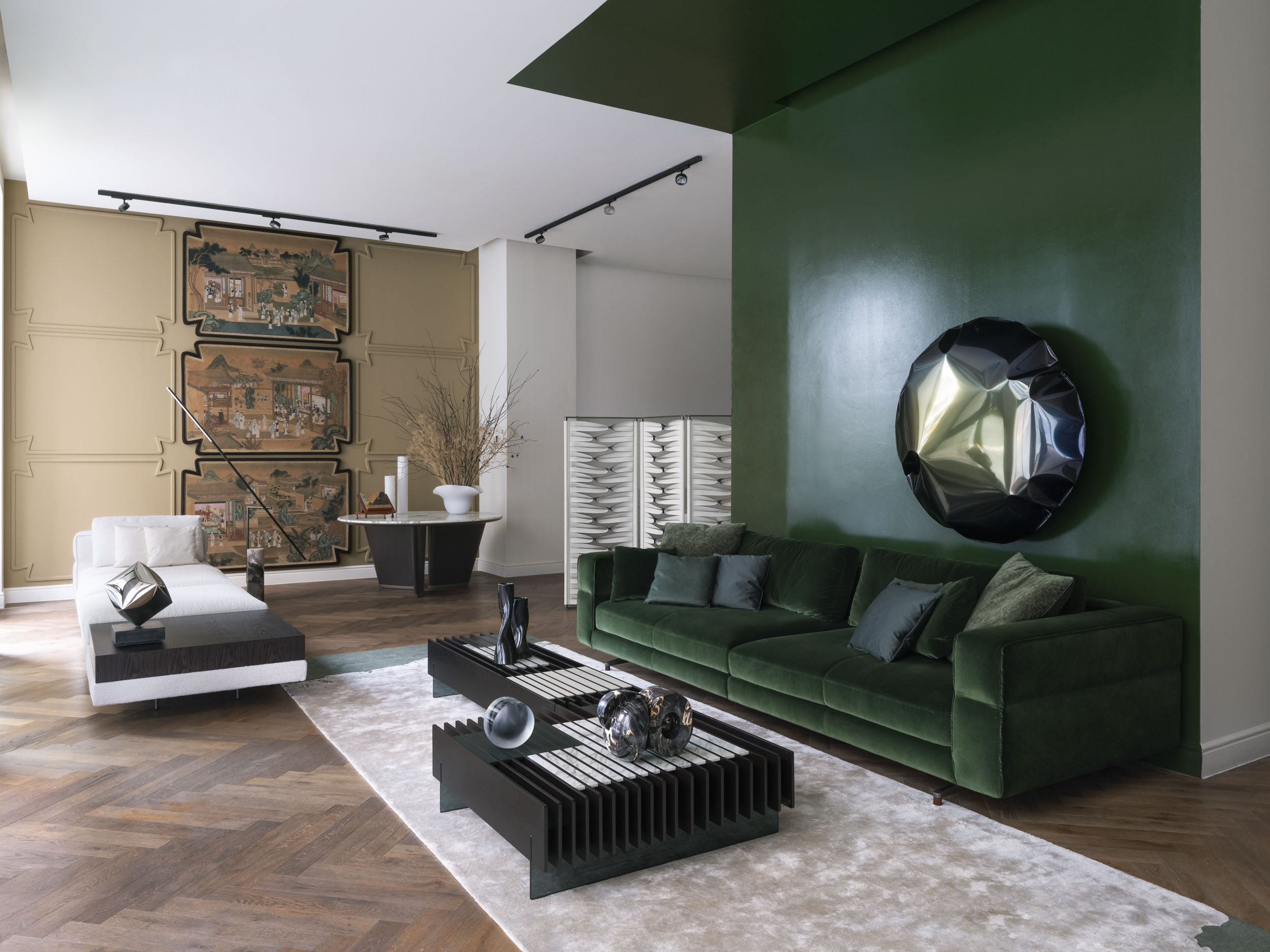
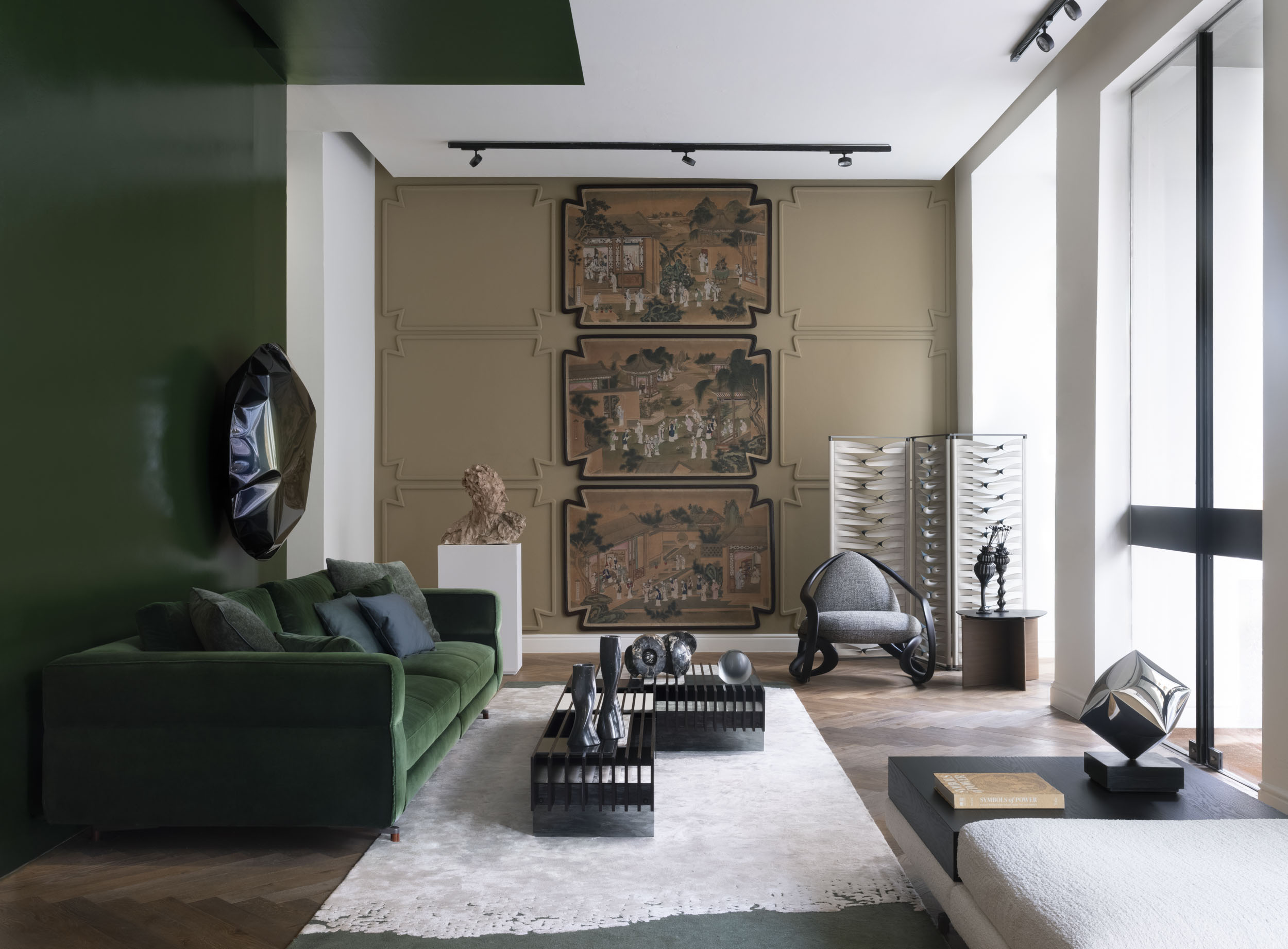
Could you tell us about the inspiration behind the Giorgetti window display created for our Salvioni Milano Durini showroom?
What we see in this Giorgetti installation is the vision of a contemporary world with great depth. The various elements selected intertwine in overlapping conceptual layers, each one more distinctive than the next.
Take the boiserie, for example: the tones and motifs depicted here subtly recall the signature elements of Portaluppi, one of the most important architects in Milan during the early 20th century, a period marked by intense energy and radical transformation.
I found these panels in an antique gallery that has supported and collaborated with us for years. Although they date back to the early 1700s, they feature several elements that echo Portaluppi’s language: the classic quatrefoil, the star, and other small details that can be found on many façades throughout Milan.
I found it fascinating to take the opportunity to speak about the 1930s and about a Milan that was then very much at the forefront of taste and style, through elements that do not actually originate from this city, yet somehow carry with them a sense of its aesthetic and its refined attention to detail.
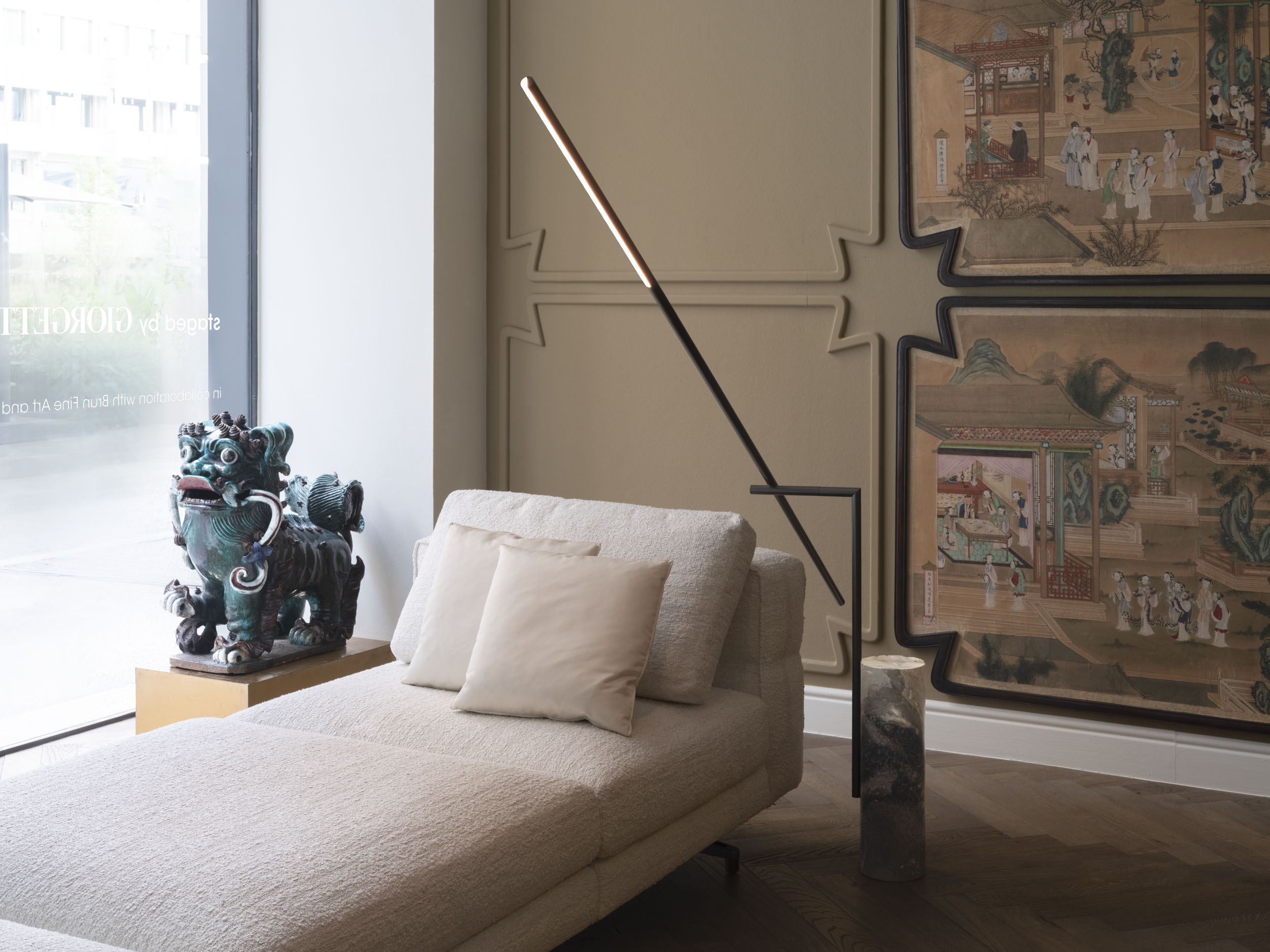
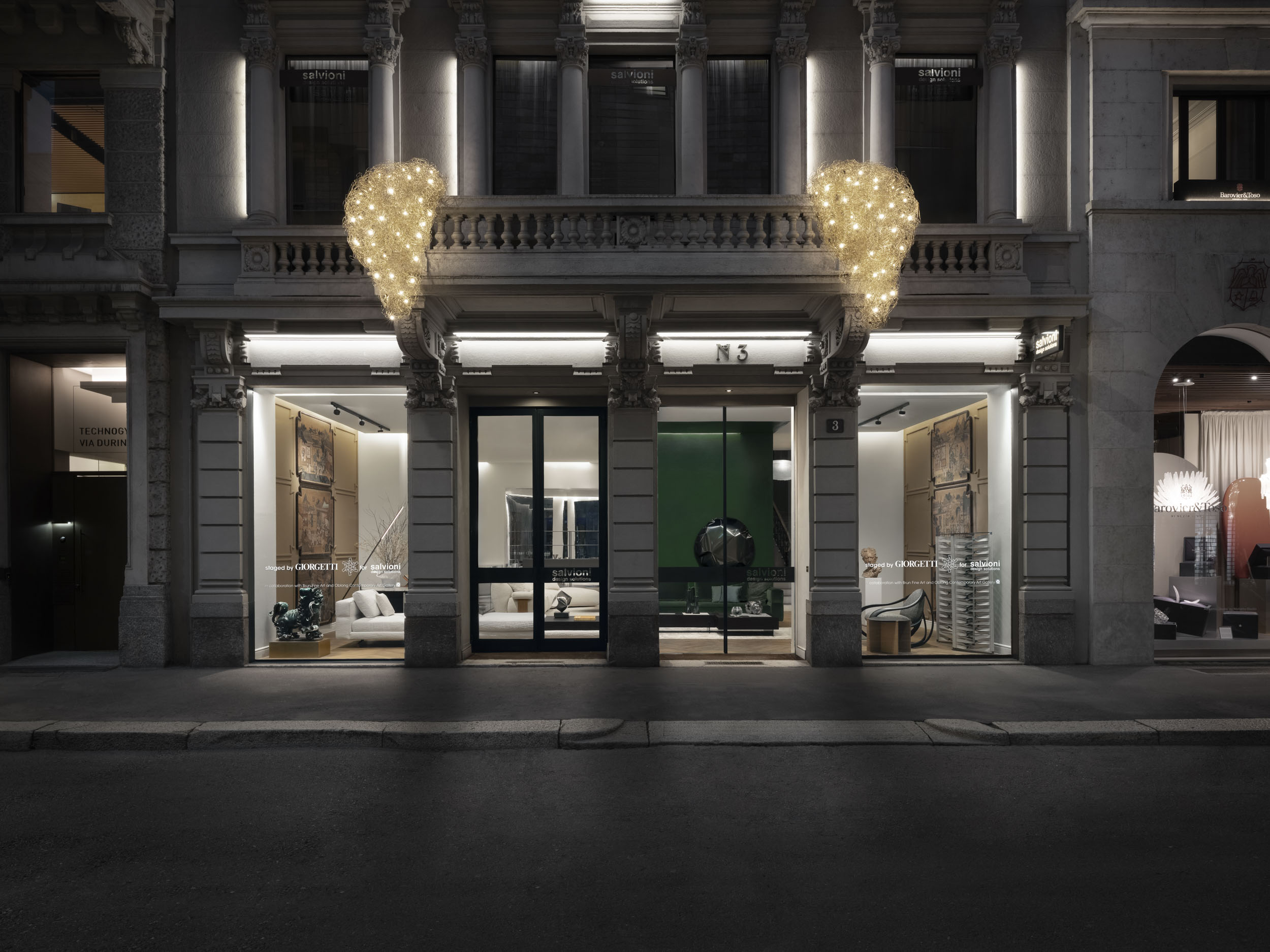
In this window display, references to the art world play a particularly important role, in a fascinating mix of period Eastern works and contemporary sculptures. In your opinion, what is the relationship between art and interior design? Which artistic movements fascinate you the most?
I don’t believe we can truly speak of a “relationship” between art and design, because for me these two halves are part of a single whole.
In more contemporary design, it is easy to recognize references and layers that lead back to the world of art, which simply shows how one permeates the other because both reside within us: in what we have seen, read, and experienced.
In this Giorgetti window display, the art world is represented through the collaborations the brand has developed over the years with the art sector, some examples of which are showcased here. These influences are extremely enriching, as they allow us to enhance our own style and bring a touch of contemporaneity to every environment.
In a few words: looking to the past in order to innovate the future.