Amanda Levete
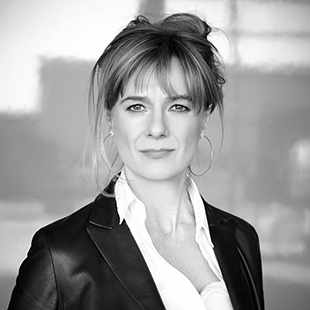
Amanda Levete (1955–) is one of the most important contemporary British architects. Born in Wales and educated in London, she began her career in architecture at the studio of Richard Rogers. The early phase of her professional life is closely linked to Future Systems, the practice founded by her first husband Jan Kaplický, which she joined in 1989 and later became co-principal of. Renowned for its ability to adapt techniques drawn from entirely different fields—such as monocoque shell structures borrowed from automotive design—Future Systems won the United Kingdom’s most prestigious architectural award, the Stirling Prize, in 1999 for the Media Centre at Lord’s Cricket Ground, the country’s most historic and prestigious cricket venue. In 2009, following her departure from Future Systems, Amanda Levete founded the studio AL_A, which quickly gained recognition for the extension of the Victoria and Albert Museum in London, completed in 2017. For the city’s foremost museum of design and applied arts, this represented the most significant redevelopment in over a century, involving a complete rethinking of the entrance and the creation of a courtyard entirely clad in handmade porcelain tiles. Other major projects by Levete include the MAAT Museum in Lisbon and the Central Embassy shopping complex in Bangkok. Her work in product design has been more limited, though notable examples include the Drift bench series for the British brand Established & Sons and her collaboration with Moroso on tables and chairs designed for the V&A Museum.