Gubi
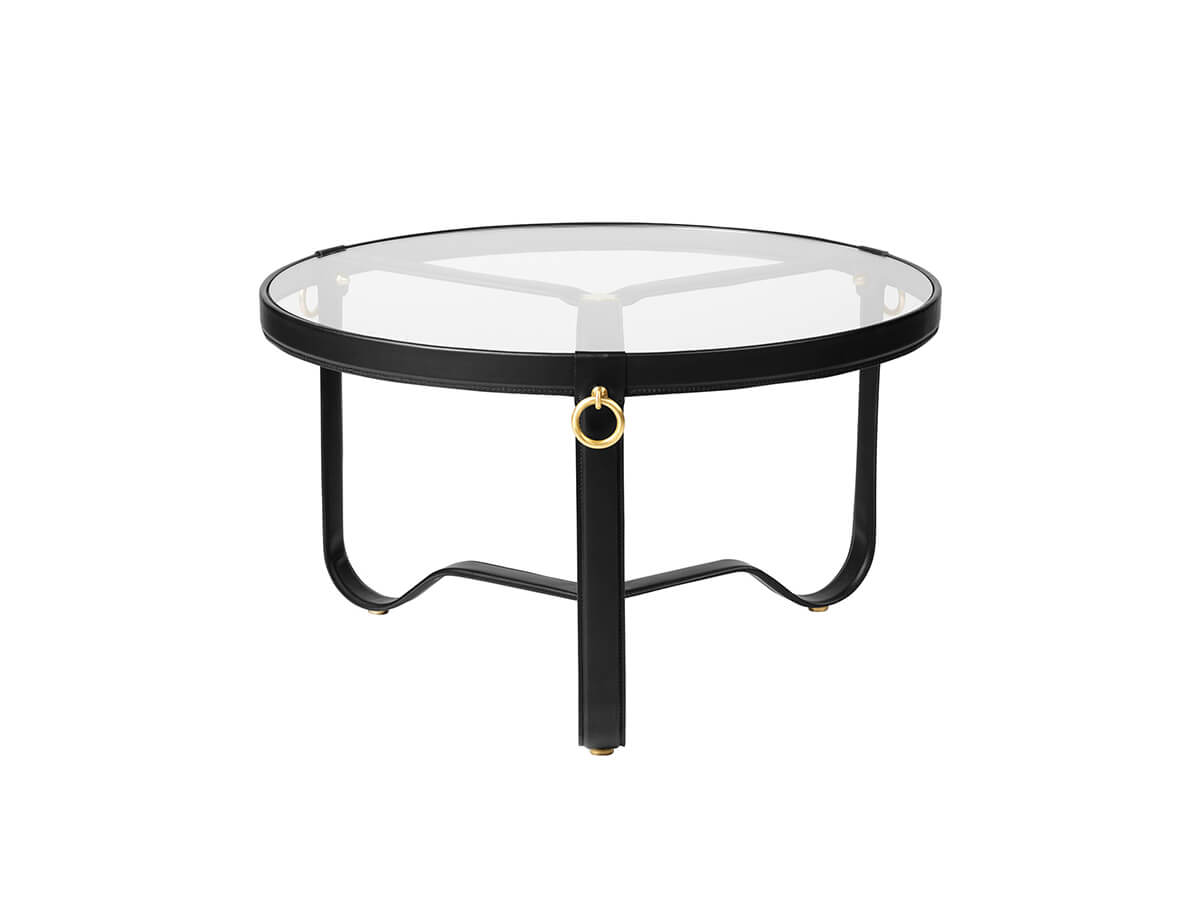
Adnet Coffee Table
Price starting from € 1,321.00*
*Price valid for the version in Ø 70 cm with frame upholstered in black leather and top in transparent glass (cod. 10004032).
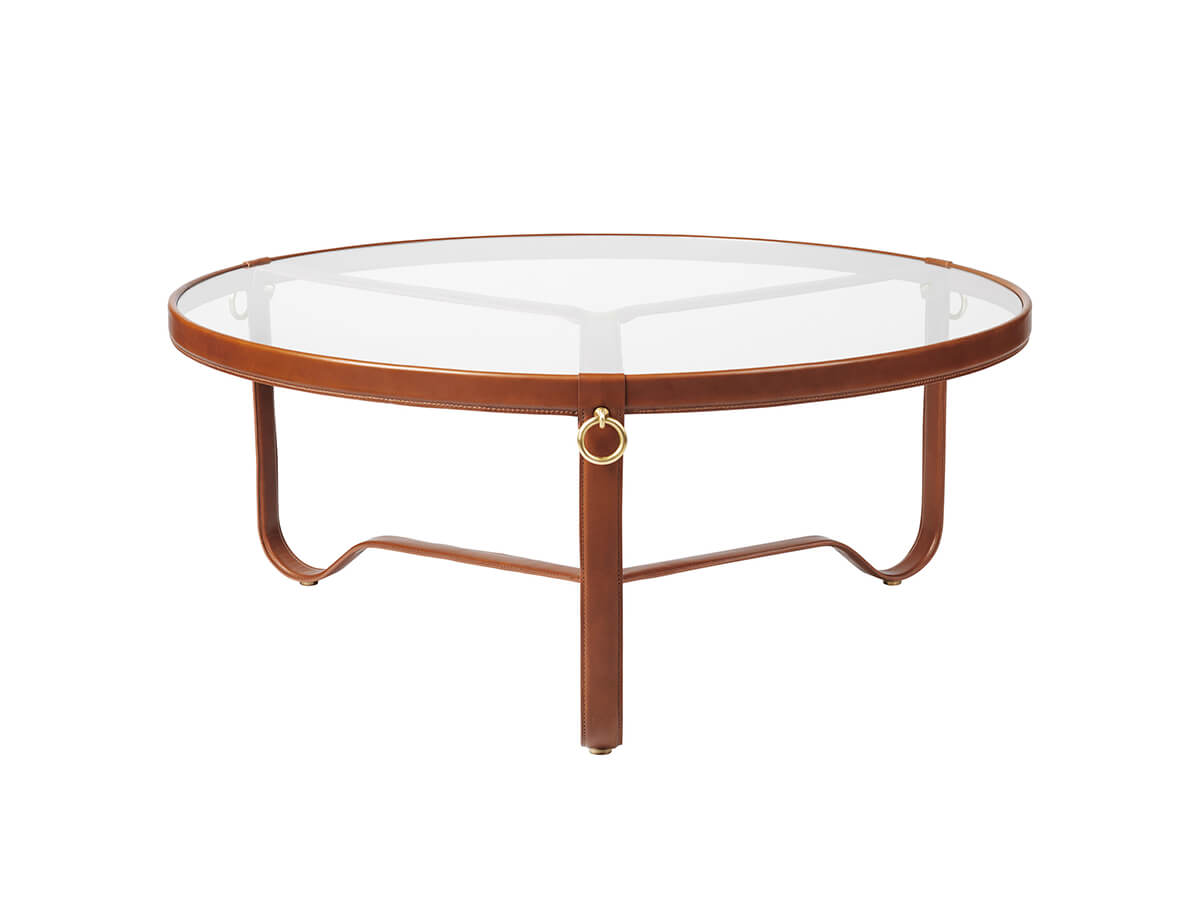
The modernist designer Jacques Adnet designs the Adnet coffee table in the 1950s, re-proposed in a contemporary key by Gubi. Three metal legs, which meet in the center of the table with a soft movement, support a round glass top, available in two sizes and characterized by a hand-crafted leather edge enriched with three golden brass rings. Timeless design and attention to detail, combined with modern materials and excellent workmanship, add distinctive value to any home or professional space.
Ø 70 x H.42 cm
Available also in Ø 100 x H.42 cm
Salvioni Design Solutions delivers all around the world. The assembly service is also available by our teams of specialized workers.
Each product is tailor-made for the personal taste and indications of the customer in a customized finish and that is why the production time may vary according to the chosen product.
To discover the full range of services available, visit our delivery page.
Personalize your request
Frame
Select
Black Leather
Tan Leather
Tan Leather
Sizes
Select
Ø 70 x H.42 cm
Ø 100 x H.42 cm
Ø 100 x H.42 cm
Select

Last born among the giants of high-end Danish design, Gubi stands out for its "heretical" style, very distant from the fruitful Scandinavian tradition. More than sobriety and simplicity, this company prefers a polished refinement, to the inspiration of nature it replaces clear retro-chic references, revisited with great inventiveness in a contemporary point of view. Suspended between past and future, Gubi furniture has a highly iconic appearance, combined with high quality construction. The Gubi catalog is very wide and covers all areas of furniture: from chairs to sofas, from tables to furnishing accessories, passing through a vast and appreciated selection of lighting.Read more
Designed by
Jacques Adnet
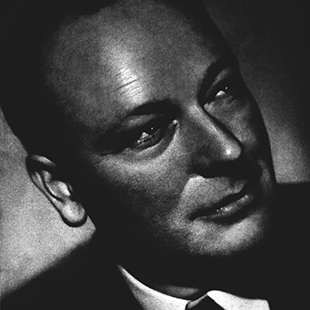
Jacques Adnet (1900–1984) was a French designer and architect, counted among the leading figures of Art Deco and French Modernism. Born in Burgundy, he studied and worked together with his twin brother Jean Adnet, with whom he founded the studio JJ Adnet. During the 1920s, the two brothers worked under the guidance of Maurice Dufrène, director of La Maîtrise, the applied arts workshop of the Paris department store Galeries Lafayette, for which they designed furniture, ceramic objects, lighting, and carpets. In 1925, they were among the key participants in the Exposition Internationale des Arts Décoratifs et Industriels Modernes, an event that went down in history as the moment when the term “Art Deco” began to be used to describe the emerging design style of the period. A few years later, at the height of their success, the twin brothers went their separate ways: Jean became artistic director of Galeries Lafayette, while Jacques assumed the role of head of the Compagnie des Arts Français (CAF), one of France’s most important interior design firms. With CAF, he realized prestigious projects such as the apartment of French President Vincent Auriol (1947) and the conference room of UNESCO’s Paris headquarters (1958). Adnet was among the first designers to integrate metal and glass into the structure of furniture, striking a balance between Art Deco stylistic elements and the emerging modernist aesthetic. He is also remembered for his collaboration with the maison Hermès throughout the 1940s, which resulted in a series of luxury furnishings making extensive use of leather as a decorative element. This collection—an outstanding example of the application of haute saddlery principles to furniture design—is now reissued by the Danish brand Gubi. After the closure of CAF in 1959, Adnet was appointed director of the prestigious École nationale supérieure des arts décoratifs in Paris, a position he held until 1971.Read more