Misuraemme
WM Armchair
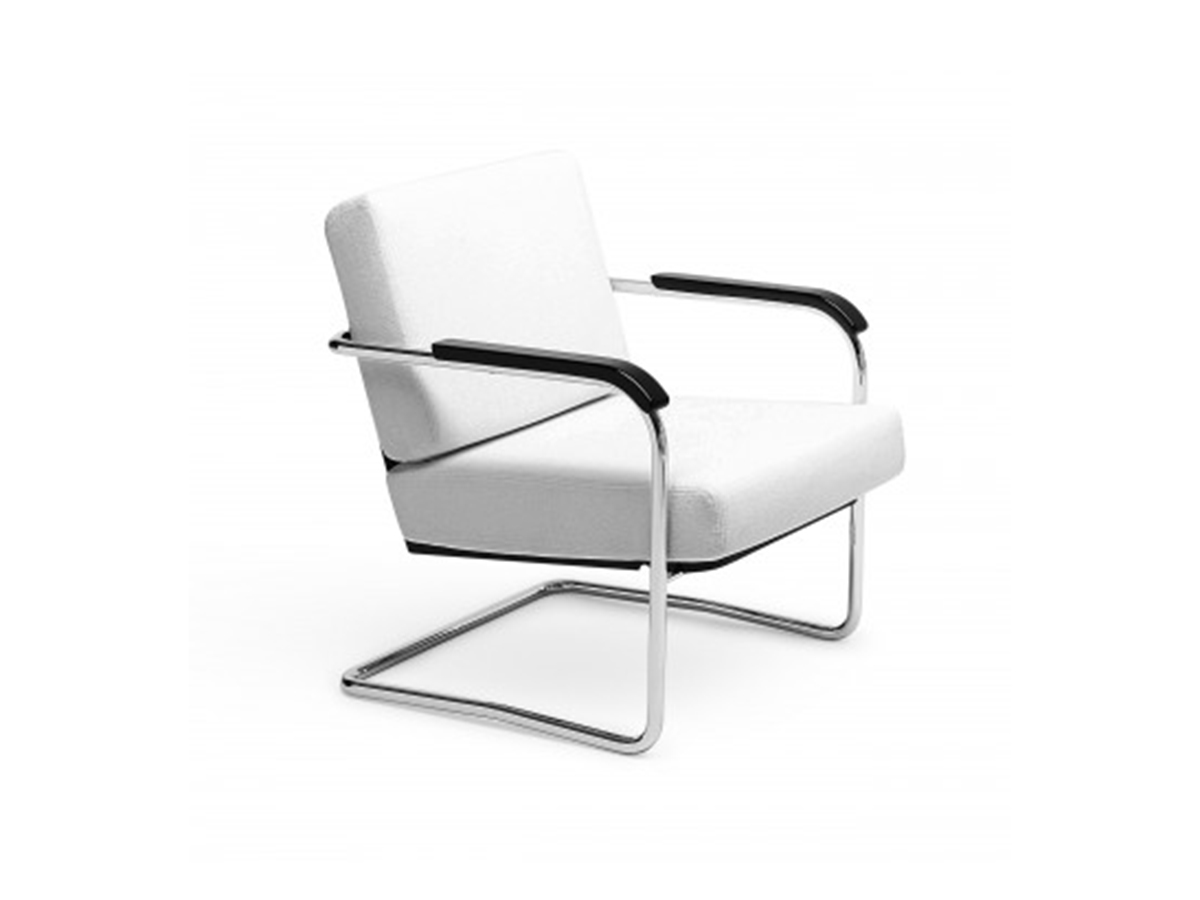
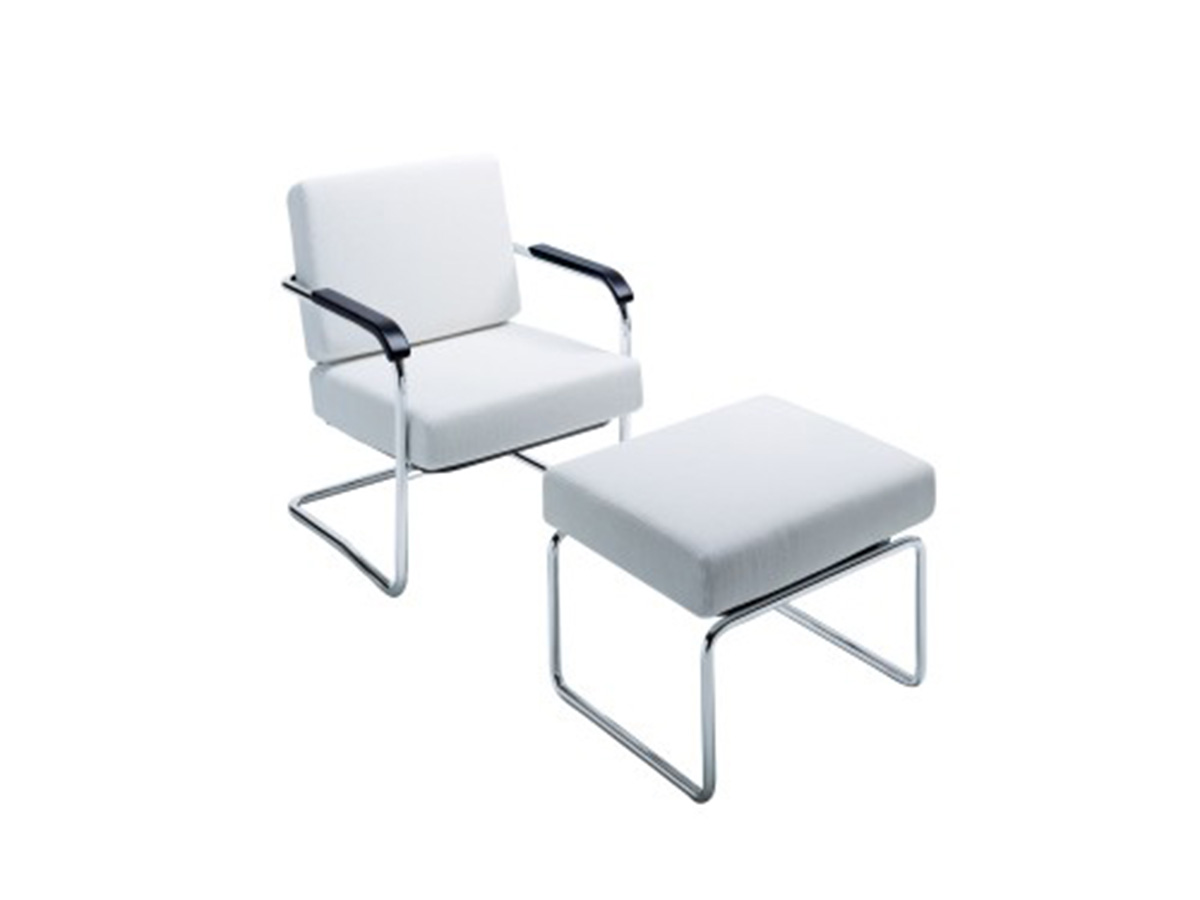
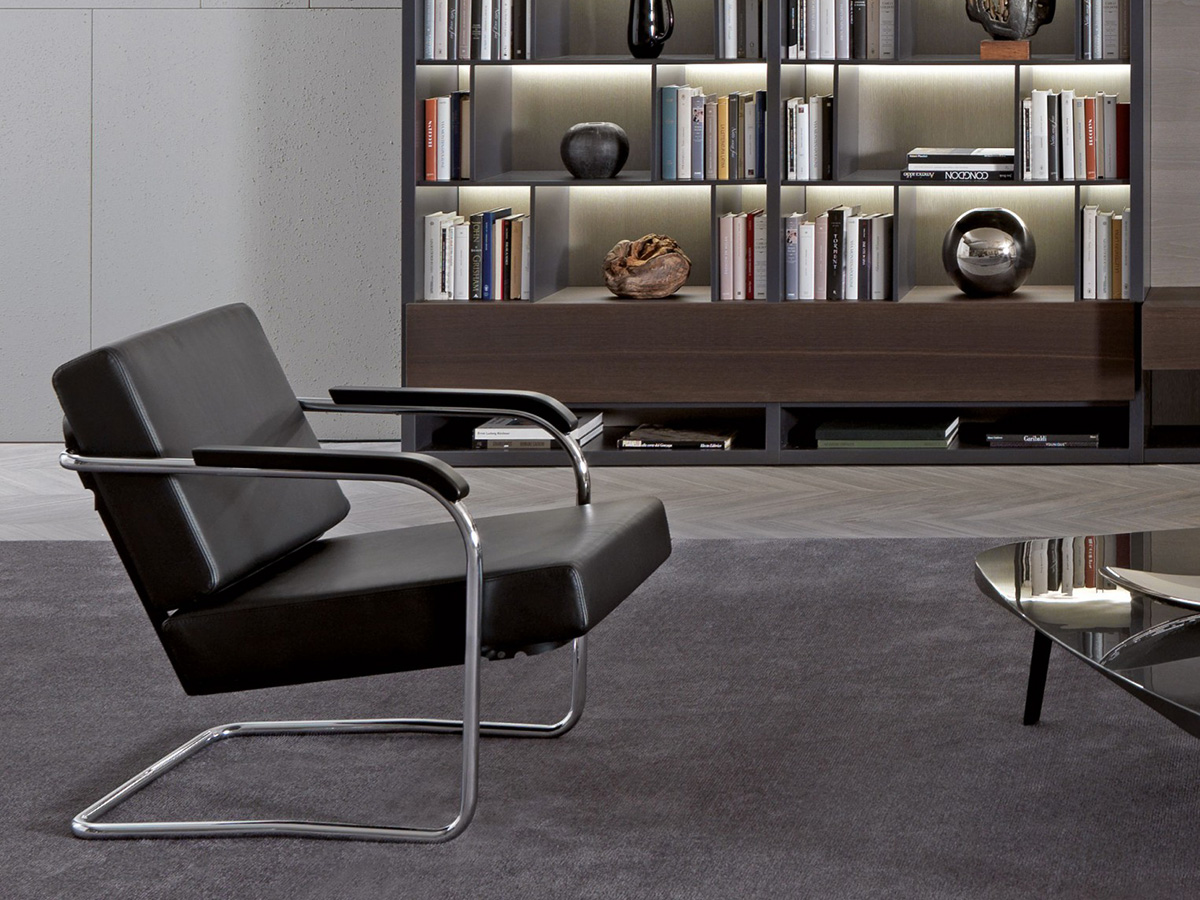
The WM armchair by MisuraEmme, designed by Werner Max Moser, is part of the "I Maestri" collection, objects of strong historical value that revolutionized the aesthetics of their time. The forms and research that went into the WM's design clearly express the dialogue between rationalist rigor and contemporary comfort. The clean lines and essential structure define a balanced seat. Designed in 1934, it survives today thanks to its precise proportions and attention to construction details, elements that give the armchair a restrained and timeless elegance. The design reflects Moser's approach, based on an architectural vision of furniture, capable of integrating naturally into space. Designed for residential and professional environments, the WM armchair combines solidity, comfort, and formal simplicity, confirming MisuraEmme's commitment to cultured, functional, and enduring design. Available with ottoman.
W.60 x D.83 x H.82 cm
Seat Height 42 cm
Salvioni Design Solutions delivers all around the world. The assembly service is also available by our teams of specialized workers.
Each product is tailor-made for the personal taste and indications of the customer in a customized finish and that is why the production time may vary according to the chosen product.
To discover the full range of services available, visit our delivery page.
Personalize your request
Upholstery
Select
Ottoman (Optional)
Select
Select

MisuraEmme is a company that has its roots in the centuries-old craft tradition of Brianza. Throughout its long history, which began in 1902 with the foundation by the Mascheroni family, it has played a leading role in the vicissitudes of Italian design. In the years of industrialization, it has become important as one of the spearheads of the world of Made in Italy furniture, thanks to its factory of over 35,000 square meters in Mariano Comense which has guaranteed a productive force with few equals. In more recent years the brand has also distinguished itself for its marked environmental sensitivity, acquiring ecological painting systems.Read more
Designed by
Werner Max Moser

Werner Max Moser (1896–1970) was an important Swiss architect. The son of Karl Moser, himself a well-known architect, Werner Max studied architecture at ETH Zurich and began his career working at various architecture firms in the Netherlands and the United States, including that of the great Frank Lloyd Wright. Upon returning to Switzerland in 1926, one of his first major works was, in collaboration with other Swiss architects, the design of the furnishings for Ludwig Mies van der Rohe’s apartments for the 1927 Stuttgart exhibition “Die Wohnung,” considered one of the seminal moments of modernist style. Moser’s role as a pioneer of modernism was further consolidated in 1928, when he was among the twenty-eight founding members of the International Congresses of Modern Architecture (CIAM), whose president was elected to be Werner Max’s father, Karl Moser. Alongside the intense theoretical and promotional activity carried out through CIAM—which over the years radically changed the way architecture was conceived in Europe—Werner Max Moser also devoted himself to his own projects. These included the Henry and Emma Budge Foundation retirement home in Frankfurt am Main (1928–30, designed together with Mart Stam and Ferdinand Kramer), the Tonhalle auditorium in Zurich (1936–39, developed with Max Ernst Haefeli and Rudolf Steiger—architects with whom he founded the HMS studio on that occasion), and the campus of the Indian Institute of Technology in Kharagpur (1950). In 1931 he was also among the founding members of Wohnbedarf AG, which over time became one of Switzerland’s most important multi-brand furniture showrooms. Over the course of his career he also had opportunities to work in furniture design: today his designs are produced mainly by the Swiss brands Horgenglarus and Embru, as well as by the Italian company MisuraEmme.Read more