Thonet
S 285 Desk
Price starting from € 6,356.00*
*Price valid for the version S 285/2 with frame in chromed metal and beechwood (cod. S 285/2).
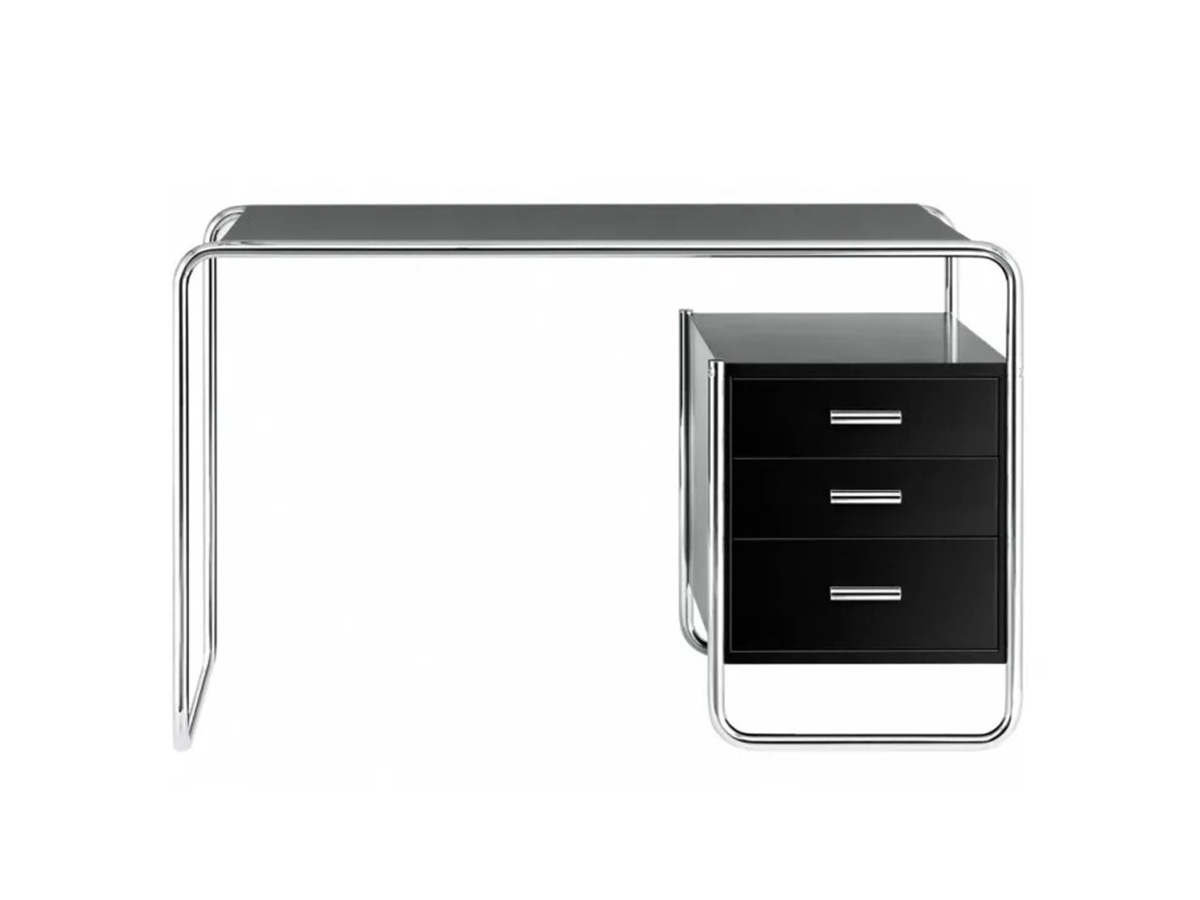
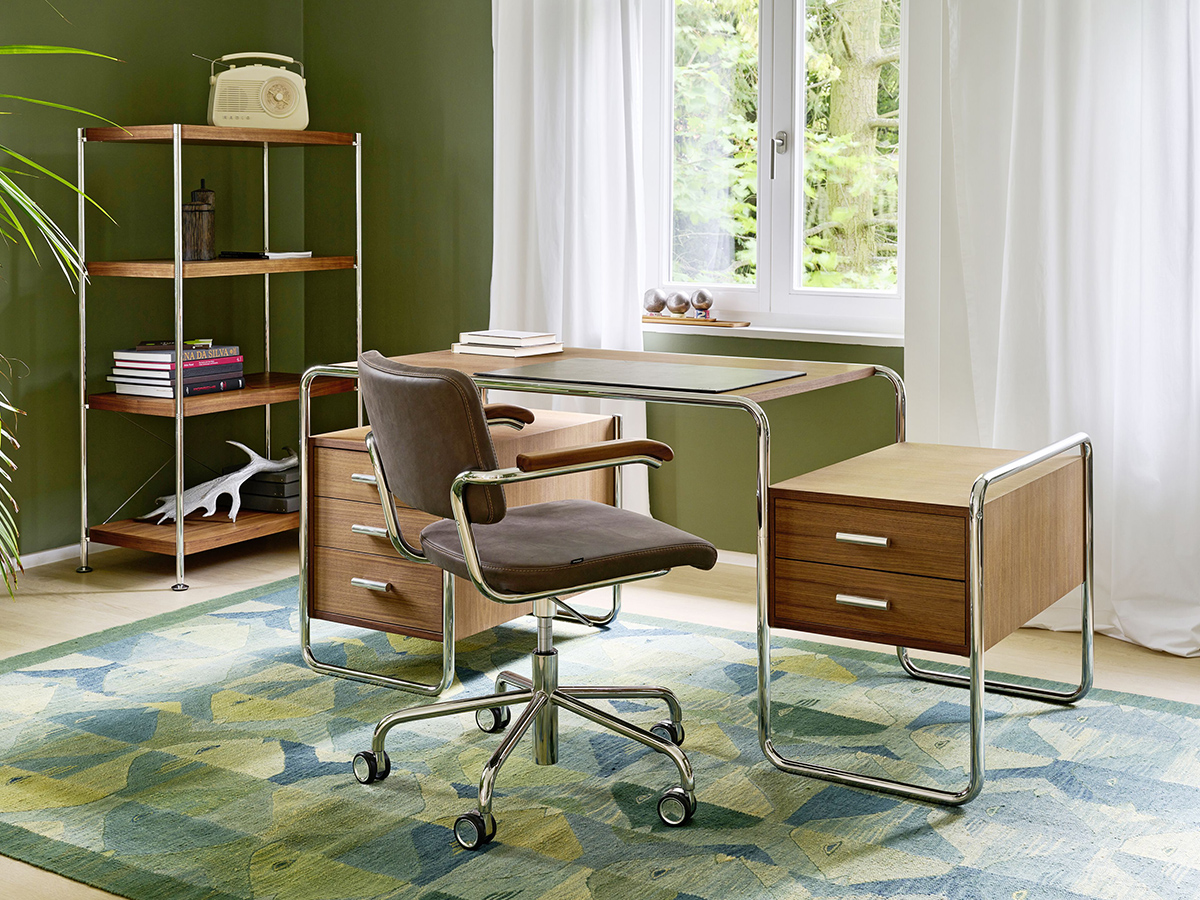
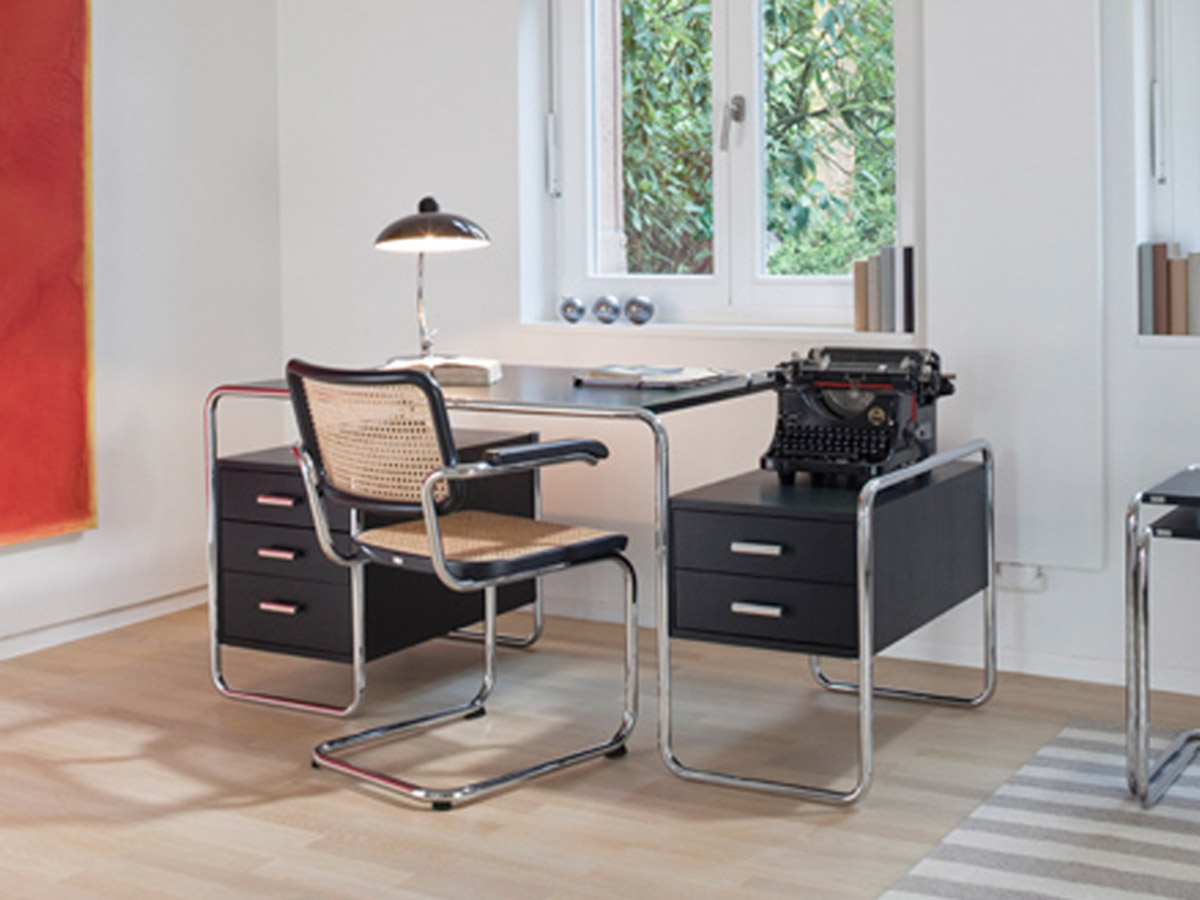
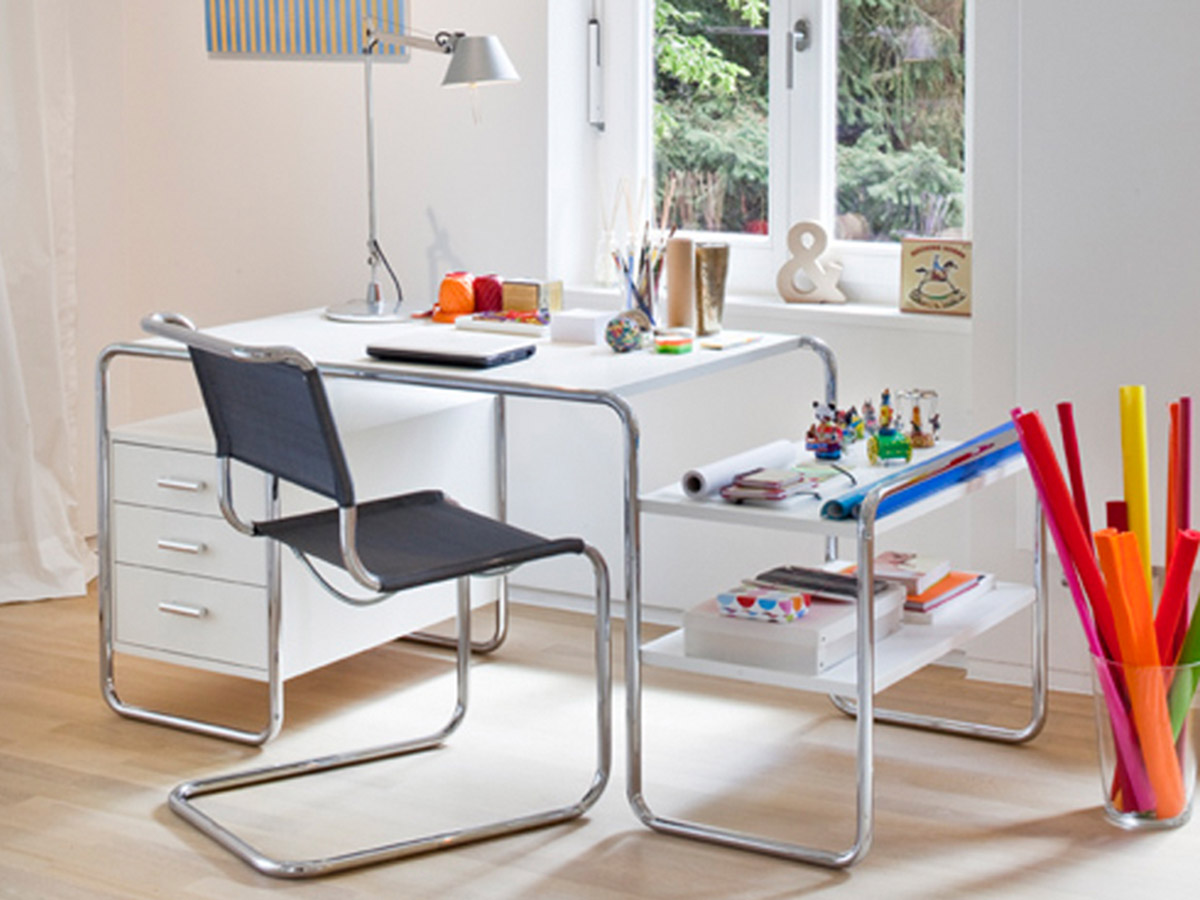
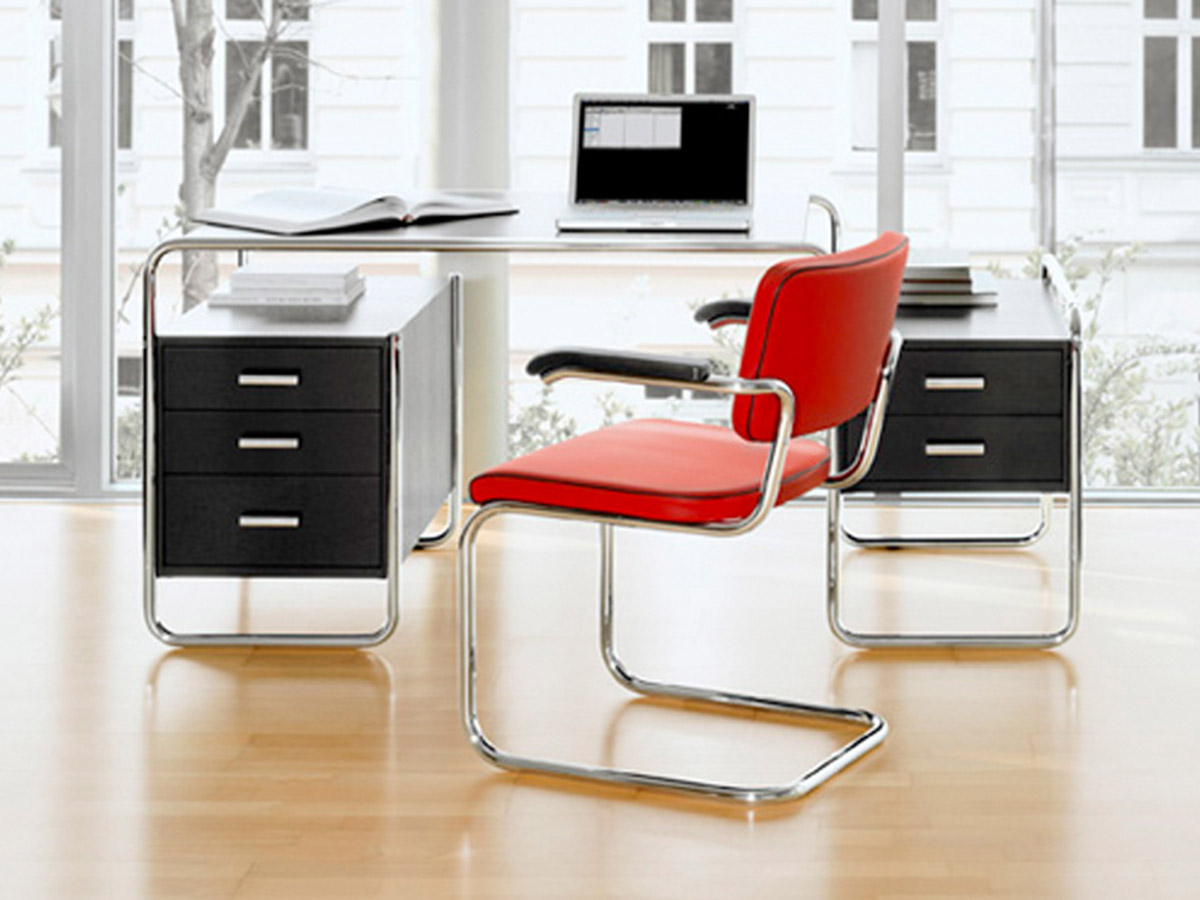
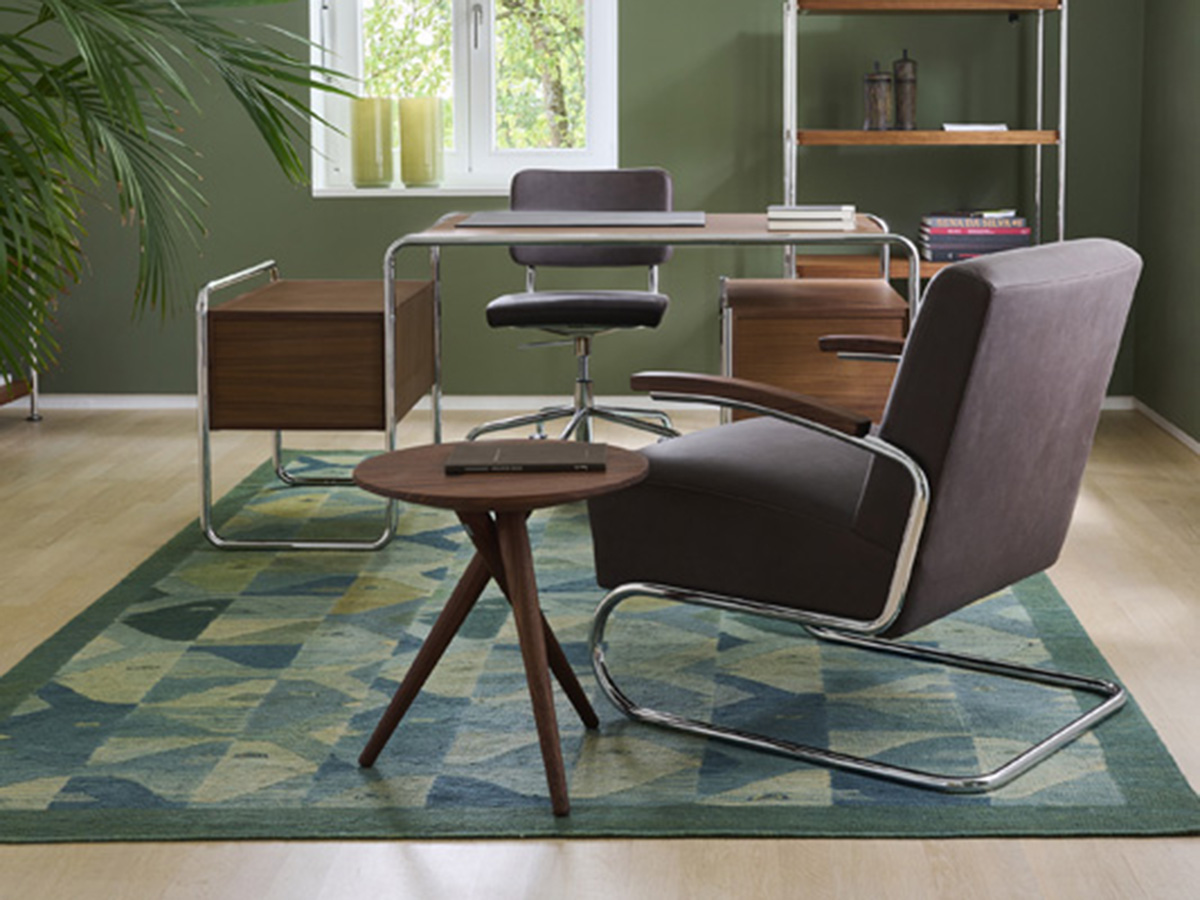
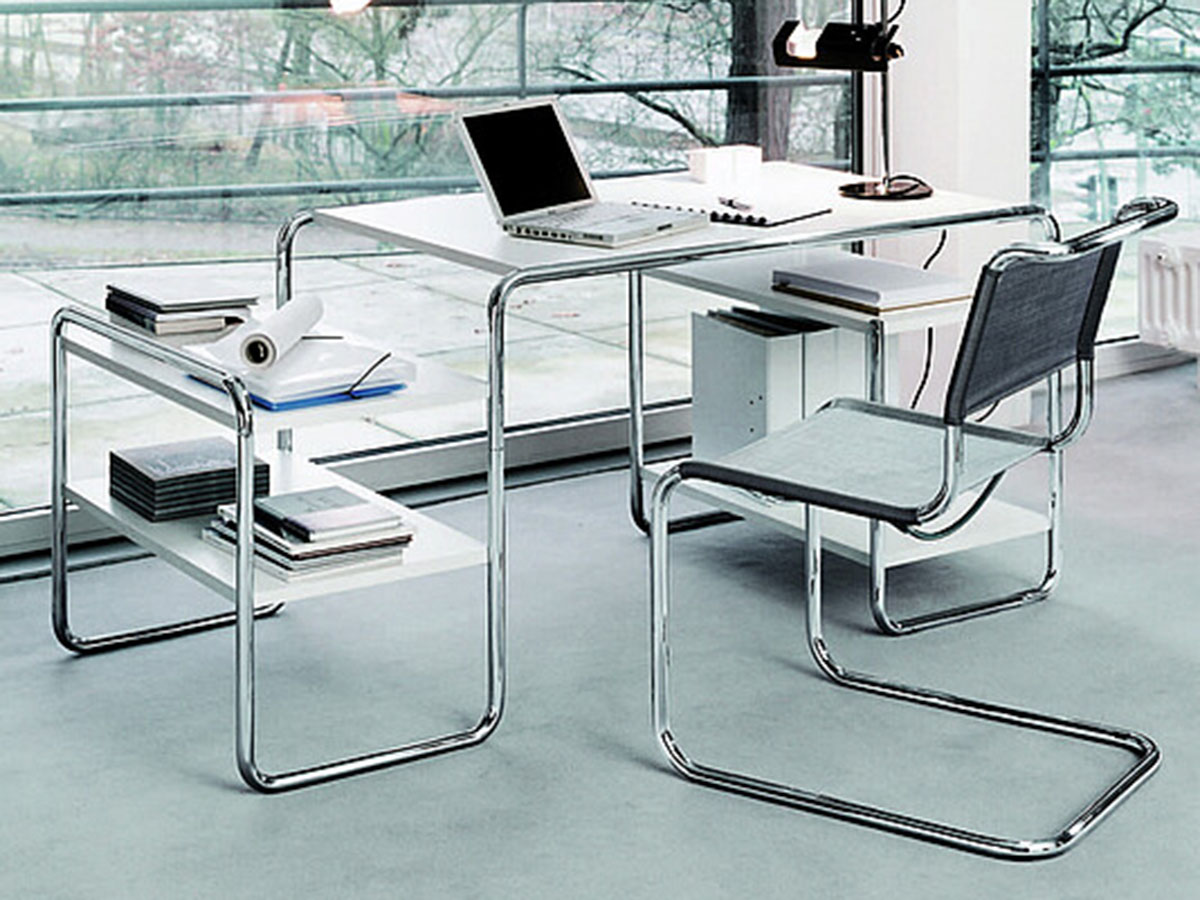
The S 285 desk was originally designed by Marcel Breuer in 1935 and quickly established itself on the international design scene thanks to its innovative aesthetic, which uses tubular steel as its main structural element. This compact desk is a successful example of the Bauhaus philosophy of combining art and technology in a single, modern design solution. The tubular steel frame connects the different elements of this office furniture piece, creating a continuous visual thread between the tabletop, storage units, legs and other components, resulting in a distinctive sense of visual modularity. Its curved lines soften the minimalist elements, which appear to float effortlessly within the structure. Thonet offers numerous variations of this model, allowing it to adapt to a wide range of interiors and individual needs.
Available in several sizes and configurations
Salvioni Design Solutions delivers all around the world. The assembly service is also available by our teams of specialized workers.
Each product is tailor-made for the personal taste and indications of the customer in a customized finish and that is why the production time may vary according to the chosen product.
To discover the full range of services available, visit our delivery page.
Personalize your request
Finishing
Select
Configuration
Select
S 285 - W.164 x D.76 x H.73 cm
S 285 0 - W.121 x D.76 x H.73 cm
S 285/1 - W.164 x D.76 x H.73 cm
S 285/2 - W.122 x D.76 x H.73 cm
S 285/5 - W.178 x D.76 x H.73 cm
Select

Thonet is one of the world’s most iconic furniture companies, a pioneer of industrial design furniture and a true milestone in the tradition of fine cabinetmaking. Its history is deeply rooted in Vienna’s past and is built on the ability to interpret the needs of each era, offering the most appropriate solutions. Thonet’s taste and style have profoundly shaped the development of design as we understand it today, driving the rise of modular production and the globalization of furniture design, while continuing to embrace the latest trends and the most contemporary sources of inspiration.Read more
Designed by
Marcel Breuer

Marcel Breuer (1902-1981), Hungarian architect and designer, was one of the great protagonists of the Bauhaus. After being a pupil of the Bauhaus School in Weimar, he was chosen at a very young age by the director Walter Gropius to manage the school's furniture workshop. He therefore has the opportunity to experience as a protagonist an inimitable season of creative ferments, in which the very concept of “modern furniture” takes shape. His creations of the time feature an innovative material such as tubular metal, to which Breuer manages to give an unusual elegance, and will find the way to mass production thanks to the Thonet company. With the coming to power of Nazism, Breuer, of Jewish origin, was forced to flee abroad, first taking refuge in London for a few years (during which he was able to create furniture for the Isokon brand) and then following his mentor Gropius in the United States. There he became a professor of architecture at Harvard University and began an intense and successful activity as an architect, with works such as the Whitney Museum of American Art in Manhattan or the Hooper House in Baltimore. In the 1960s he met the brilliant Italian entrepreneur Dino Gavina who convinced him to put his furniture back into production for the Gavina company (which was then sold to Knoll a few years later).Read more