Zanotta
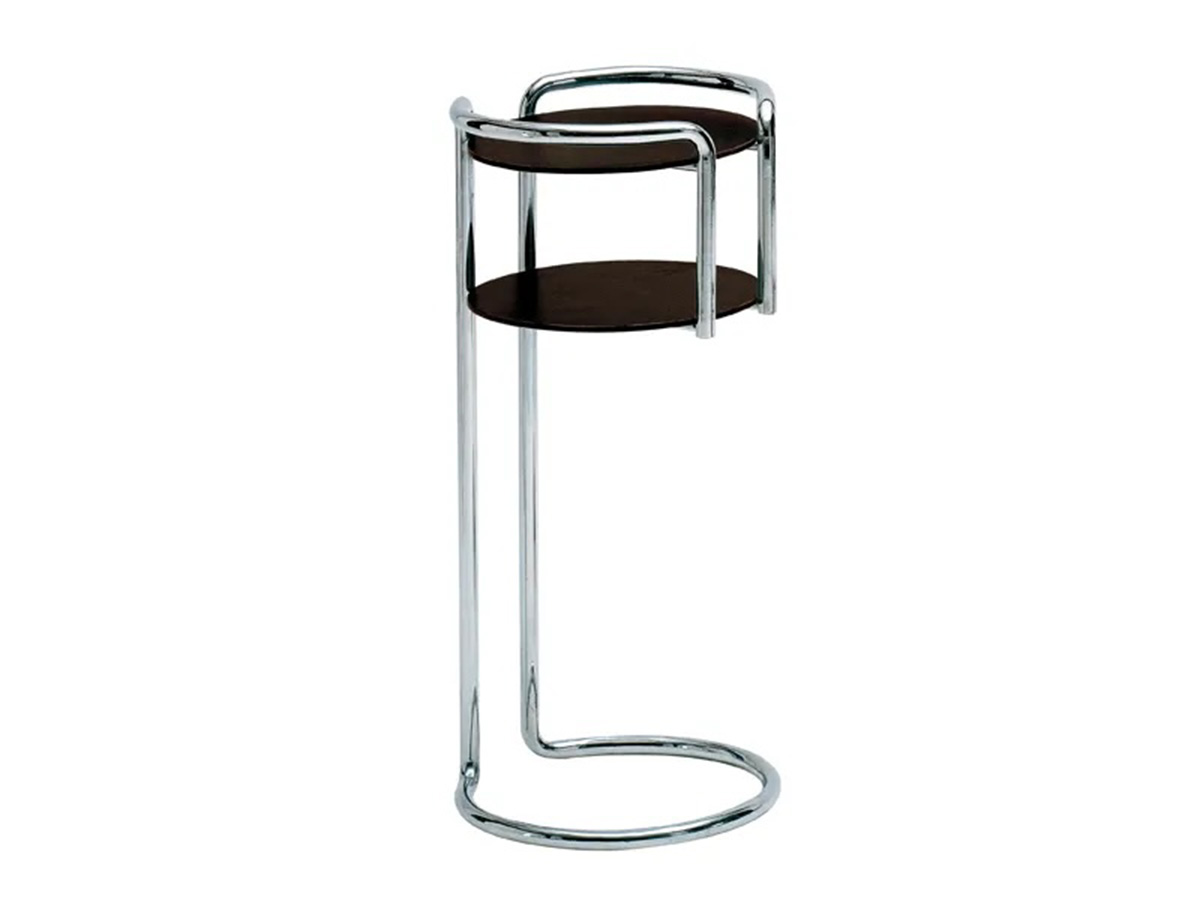
Chichibio Objects Stand
Price € 1,739.00
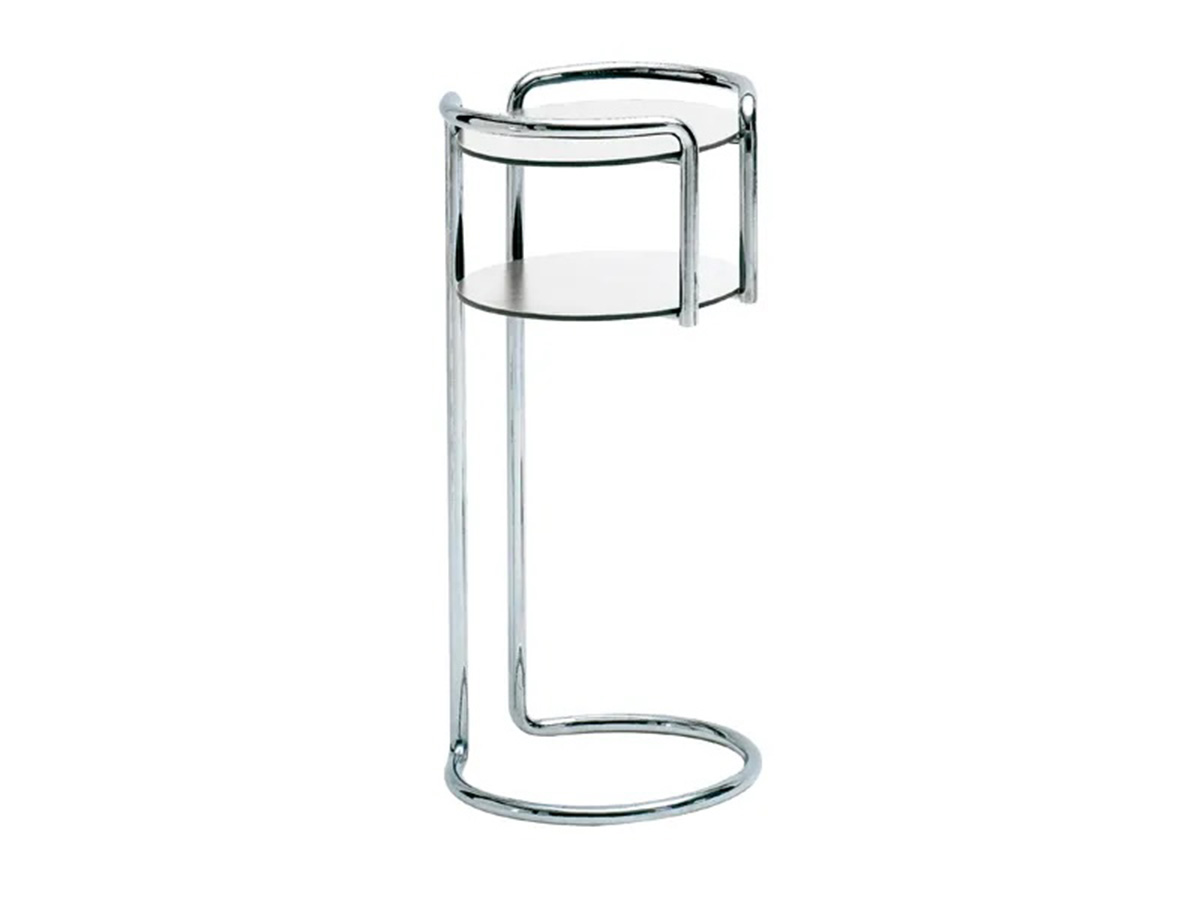
An everyday object, essential in any home where there is a need to store small items. The structure of Chichibio is made of chrome-plated steel, crafted into a single continuous element into which shelves in layered plastic laminate are fitted. This storage unit is available in two different colors, white and black, allowing it to adapt easily to a variety of settings. The beauty of Chichibio lies in its ability to combine effective design with a distinctly 1970s aesthetic, where the purity of form is still evident, along with the use of clean, well-defined colors and the pursuit of an aesthetic that fulfills multiple functions without ever losing its own identity.
Ø 37,5 x H.90 cm
Salvioni Design Solutions delivers all around the world. The assembly service is also available by our teams of specialized workers.
Each product is tailor-made for the personal taste and indications of the customer in a customized finish and that is why the production time may vary according to the chosen product.
To discover the full range of services available, visit our delivery page.
Personalize your request
Colours for Top
Select
Black
White
White
Select
Select

Design and culture: from these two inspirations, Zanotta draws its identity. Browsing the Zanotta catalog is like entering a real design museum full of the key works of some of the biggest protagonists of the furnishings field. Founded in Nova Milanese by Aurelio Zanotta in the ‘50s, the company inextricably links its name to the avant-garde design season, from which innovative furnishings are born, often enriched by an ironic touch. To these timeless masterpieces, Zanotta flanks reissues of classics from the first half of the twentieth century and a contemporary collection inspired by great lightness and quality.Read more
Designed by
Gino Levi-Montalcini

Gino Levi-Montalcini (1902-1974) was an important Italian architect. He was a member of an important Turin family of Jewish origins, whose members were able to achieve excellence in various fields: his younger sister Rita-Levi Montalcini was in fact an important scientist, also awarded the Nobel Prize, while her twin Paola was a celebrated painter. Gino's name is instead mainly linked to the architectural movement of Rationalism, a movement he joined by frequenting the avant-garde intellectual circles during his years of study at the Polytechnic of Turin. His first years of activity saw him alongside Giuseppe Pagano, his former classmate: the two co-signed together one of the main rationalist architectures of the period, the Palazzo Gualino in Turin (1928), built to house the offices of the companies of the important Piedmontese industrialist Riccardo Gualino. During the 1930s he continued his activity independently in Turin with numerous projects including Villa Caudano (1935-36). At the end of the decade he was forced to stop working due to the racial laws promulgated by the fascist regime, but managed to escape harsher persecution during the war years. In the post-war period he was the protagonist of an intense university teaching activity in Turin (1948-56), Palermo (1956-64) and Padua (1964-71), accompanied by important projects such as the planning of the new Vallette district in Turin (1957-58) and the Palazzo Nuovo of the University of Turin (1961-66). Some of the furnishings created for his projects were re-edited starting in the 1980s by the Zanotta brand.Read more