La Permanente Mobili Cantù
IT57 Bookshelf
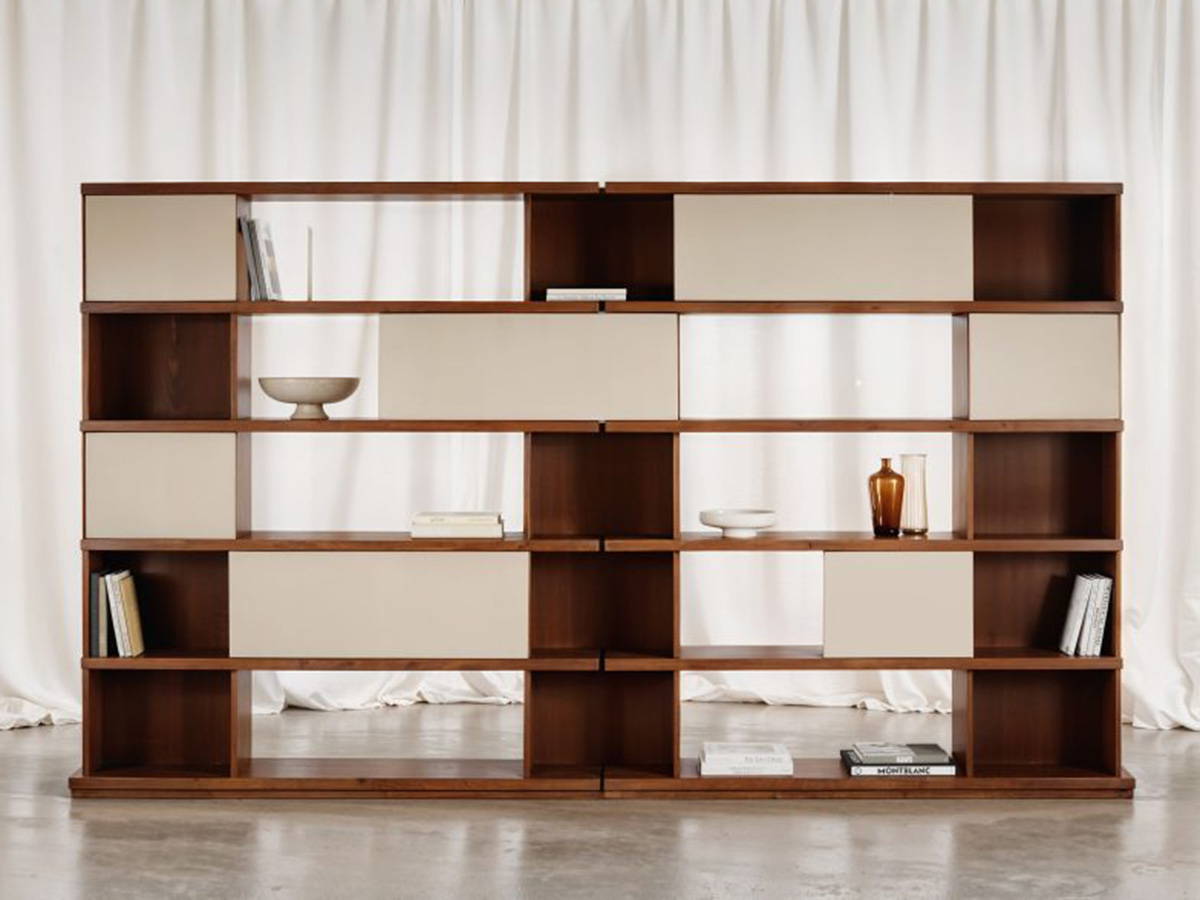
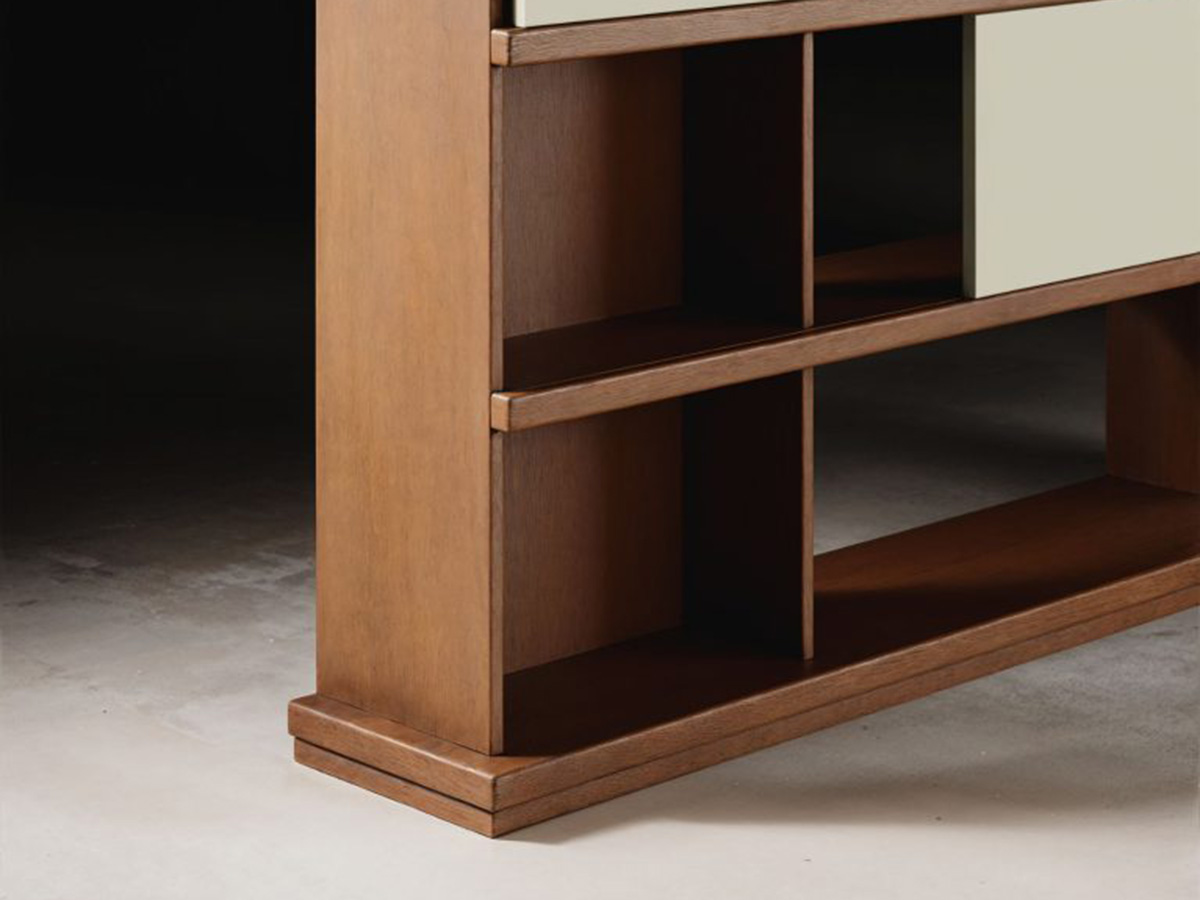
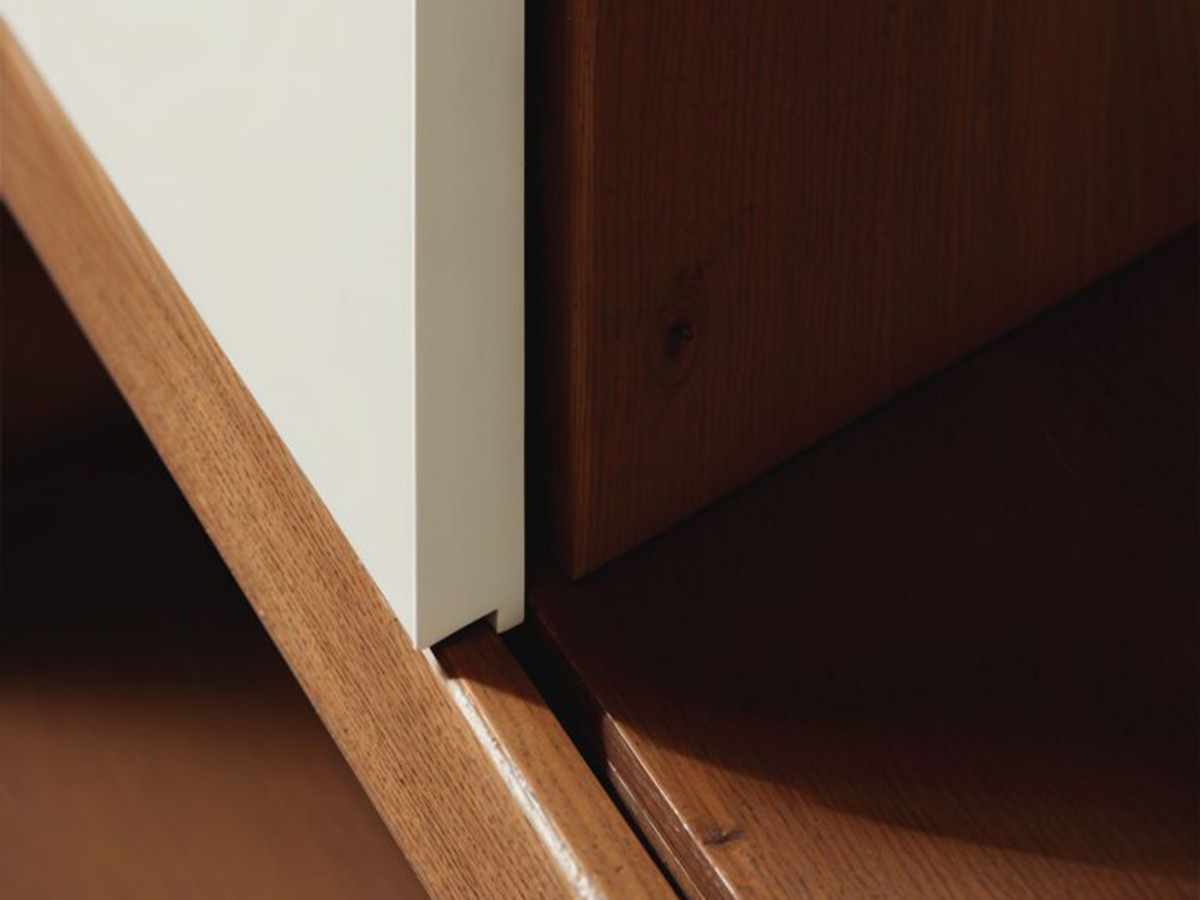
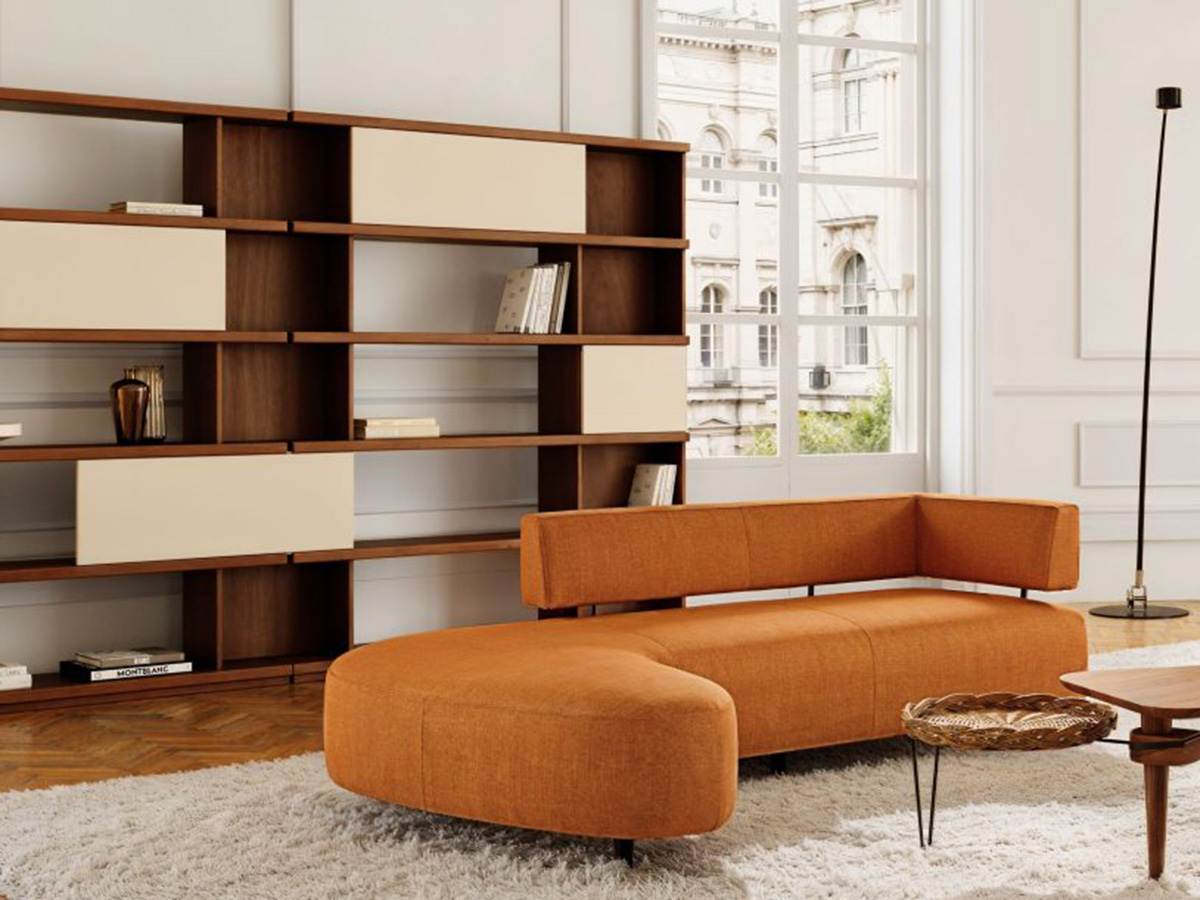
The IT57 bookcase is an iconic piece of 1950s Scandinavian modernism, embodying the style of renowned designer Ilmari Tapiovaara, who designed it in 1957. It made its debut on the design scene that same year at the second edition of the Selettiva del Mobile exhibition in Cantù, where it attracted considerable attention and received numerous accolades. Today, it is available as a re-edition within the historic Selettiva for All collection by the La Permanente Mobili Cantù consortium, which has reintroduced the piece by enhancing its artisanal details while adapting them to more contemporary technologies. The teak wood frame features sliding panels upholstered in fabric, creating a distinctive interplay of textures and materials.
W.305 x D.35 x H.209 cm
Salvioni Design Solutions delivers all around the world. The assembly service is also available by our teams of specialized workers.
Each product is tailor-made for the personal taste and indications of the customer in a customized finish and that is why the production time may vary according to the chosen product.
To discover the full range of services available, visit our delivery page.
Personalize your request
Frame
Select
Select
Select
La Permanente Mobili di Cantù is a historic consortium of furniture manufacturers and artisans, founded in 1893 with the aim of promoting and showcasing Cantù’s excellence and long-standing furniture-making tradition around the world. Its historic headquarters, Palazzo de La Nuova Permanente Mobili Cantù, located in Piazza Garibaldi, was designed by Renato Radici and represents an important example of 20th-century architecture.Read more
Designed by
Ilmari Tapiovaara

Ilmari Tapiovaara (1914-1999) was one of the great masters of Finnish design, among the first to obtain successes and recognitions also abroad, among which stand out six Gold Medals won at the Milan Triennale (1951, 1954, 1957, 1960 and 1964). He devoted most of his attention to the design of chairs, aiming to create models that were easy to produce and transport, stackable and cheap, perfect for export all over the world and almost always made of wood. He had as teachers some sacred monsters of modernism, starting with Alvar Aalto, tutelary deity of Finnish design, alongside whom he worked in the London branch of Artek between 1935 and 1936 and by whom he was greatly influenced. He also had experiences in the Parisian studio of Le Corbusier, in 1937, while in the 1950s he had the opportunity to work in the Chicago studio of Ludwig Mies van der Rohe. In turn he was the teacher of an entire generation of Finnish designers through his chair at the Helsinki Institute of Industrial Arts, held in the early 1950s before a long series of teaching and working experiences abroad. He worked with some of the most important brands of the time, including Asko (at the time the largest Finnish furniture manufacturer, Tapiovaara was artistic director from 1937 to 1940), Knoll and Thonet, but today almost all that remains of his production – including the iconic Domus chair, probably its most famous product – is produced by Artek. Starting in the 1960s, he expanded his areas of practice, designing, among other things, cutlery for Hackmann and collections of lamps now reissued by Santa & Cole.
Read more